


How to Market to Parents of Teens: A Practical Guide for Program Providers
Posted April 29, 2026, 1:45 pm by
Every teen program has the same math problem. Teens discover your program. Parents pay for it. But teens and parents use different platforms, respond to different messages, and care about different things.
Most program providers solve this by marketing to one audience and hoping the other follows. They run TikTok ads for teens and assume parents will get the message secondhand. Or they send emails to parents and hope those parents mention it at the dinner table.
Neither approach works particularly well on its own. The programs that fill seats consistently are the ones that market to both audiences at the same time, with separate strategies for each.
This guide breaks down how Millennial parents (the majority of today's teen parents) research, compare, and choose programs for their kids. We'll cover the channels that actually reach them, how to split your messaging for two audiences, and the specific tactics that move parents from "I'll look into it" to "here's my credit card." At the end, we've put together a free cheat sheet you can reference when planning your next campaign.
Why marketing to parents requires a different approach
If you've been marketing primarily to teens, the parent audience will feel unfamiliar. The research behaviors are different. The decision timeline is different. The trust signals are different.
A few things worth understanding about today's teen parents:
Most are Millennials (born 1981-1996). They grew up with the internet. They don't need you to explain how to find information online. They're already checking your reviews, comparing you to competitors, and evaluating your social media presence before you know they exist.
They compare options aggressively. According to consumer research, 98% of consumers read online reviews for local businesses. Parents of teens are no exception. They typically evaluate 3-5 programs side by side before reaching out to any of them. If your program doesn't have visible, recent reviews, you're getting filtered out during this comparison phase.
They research differently than their teens. While teens discover programs through TikTok, Instagram, and peer recommendations, parents lean on Google searches, program directories, email newsletters, and Facebook. A program that only shows up on teen-facing platforms is invisible to the person who writes the check.
They care about outcomes more than experiences. Teens want to know if your program looks fun. Parents want to know what their child will gain: skills, confidence, a college application edge, personal growth. Both messages need to exist in your marketing, but they need to live in different places.
The channels that reach parents
Not every channel works equally well for parent audiences. Here's where to focus, based on what consistently performs for teen program providers.
Facebook and Instagram (paid and organic)
Facebook is still the primary social platform for Millennial parents. It's where they spend time, where they belong to local parenting groups, and where targeted ads reach them most cost-effectively.
Instagram overlaps: parents use it to validate programs their teens brought up. When a teen says "I want to do this camp," the parent's first move is often to look up the program on Instagram. If your feed is thin or hasn't been updated recently, parents read that as a signal that something might be off.
For paid campaigns, run separate ad sets for parents and teens. Parent-facing ads should use testimonials from other parents, highlight outcomes and safety, and link to your program page (not a flashy video). Teen-facing ads should show real students having real experiences.
Email is the highest-converting channel for reaching parents directly. They check it daily, and a well-timed email during peak research season (January through March) can drive significant enrollment.
The key is building an email list of parents, not just teens. If your forms only capture student information, you're missing the decision-maker. Add a parent email field to your registration forms, inquiry forms, and lead magnets. Then build a nurture sequence designed specifically for parents: program overview, parent testimonial, logistics FAQ, deadline reminder.
Google Search and SEO
Parents search for programs differently than teens. They use longer, more specific queries: "summer STEM programs for high schoolers near me," "pre-college programs for rising juniors," "best enrichment programs for teens in [city]." They're further along in the decision process and have higher intent.
Your website needs to answer parent questions above the fold. What is the program? Who runs it? How much does it cost? Is it safe? What will my child get out of it? If a parent has to dig through three pages to find this information, they'll move on to the next option.
Program directories
Directories like TeenLife put your program in front of families who are actively comparing options. This is a high-intent audience. They've already decided they want a program and are now evaluating which one. Showing up in a directory with strong reviews and complete information is one of the most efficient ways to reach parents during the decision phase.
The messaging split: parents vs. teens
This is where most program providers go wrong. They write one set of marketing copy and use it everywhere. But marketing to gen-z is unlike any other generation. The same program value needs to be framed completely differently depending on who's reading.
For parents, lead with outcomes. Parents want to know what their teen will gain. Skills. Confidence. Friendships. Resume value. Personal growth. Frame every piece of parent-facing content around what the teen walks away with, not just what they'll do during the program.
For teens, lead with experience. Teens want to know what it looks and feels like. Show them real students, real moments, real energy. They want proof that other teens like them had a great time. Polished marketing copy doesn't work here. Authentic, slightly messy, real content does.
For parents, emphasize trust and safety. Staff-to-student ratios. Background check policies. Emergency procedures. Accreditations. Parent testimonials. These details may not appear in your promotional materials for teens, but they matter enormously to the person deciding whether to send their child away for a week or a month.
For teens, emphasize social proof from peers. A recommendation from a friend or a video from a past participant carries more weight than anything you could produce in-house. Encourage past students to share their experiences on social media. Repost their content. Build a library of user-generated stories.
The programs that handle this well aren't creating twice as much content. They're taking the same raw material (student stories, program highlights, staff introductions) and framing it differently for each audience.
When to reach parents in the annual cycle
Parent outreach needs to align with the research and decision timeline, not your internal marketing calendar.
October through December: Parents aren't actively shopping yet, but early-bird announcements and "save the date" emails to your existing parent list plant the seed. If a parent heard about your program last year but didn't enroll, this is when you re-engage them.
January through March: Peak research and enrollment season. This is when parents are actively comparing options, reading reviews, and making decisions. Your paid ads, email campaigns, and directory presence need to be strongest during this window. If your budget is limited, concentrate it here.
April through May: Late registration. The parents still looking at this stage are often undecided or comparing two final options. Address their objections directly: cost concerns, scheduling conflicts, safety questions. This is where a "still deciding?" email sequence works well.
June through August: While your program is running, capture content that will reach next year's parents. Parent testimonials collected within two weeks of the program ending have the highest response rates. Photos and videos from the current season become your marketing material for the next one.
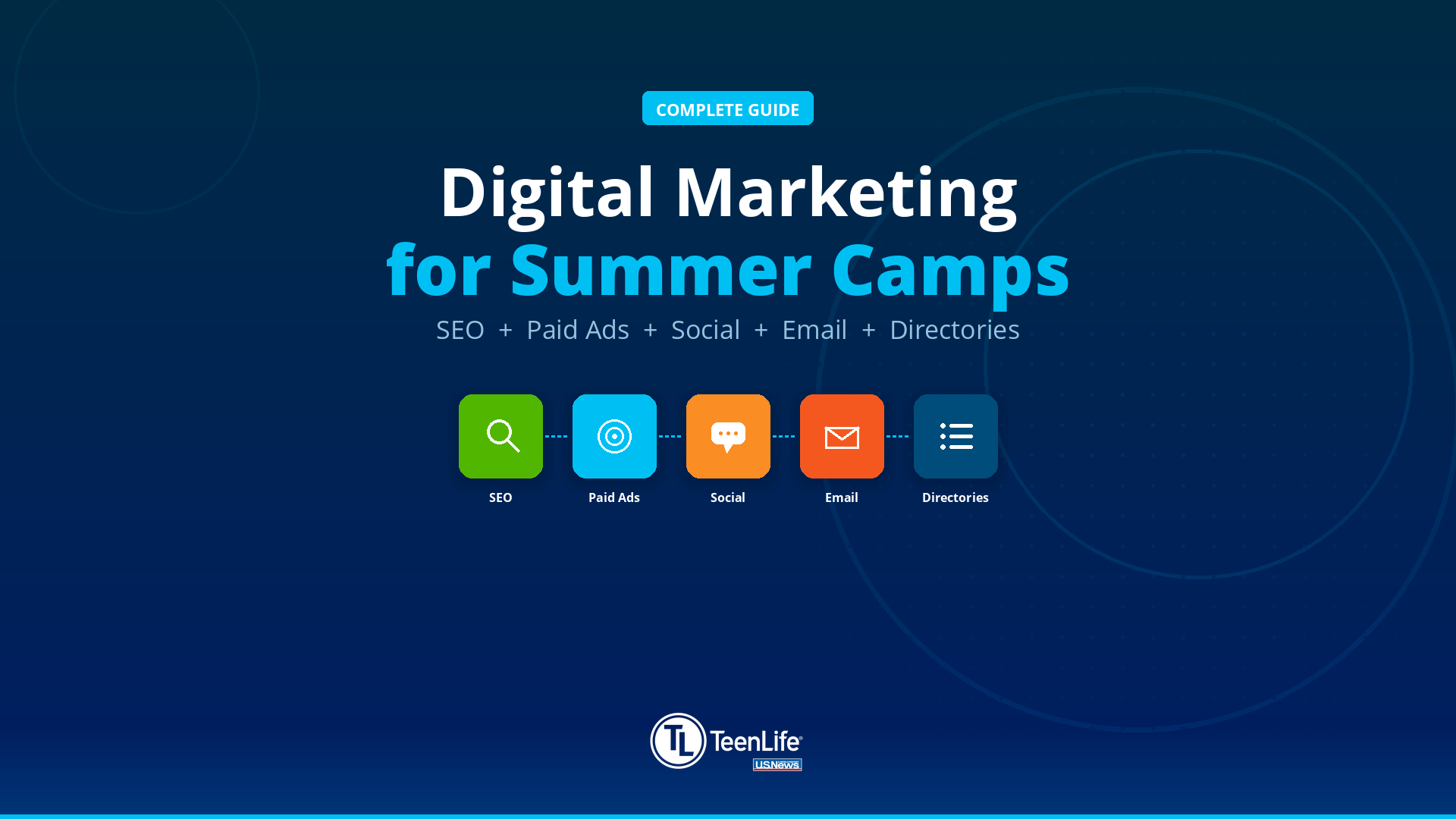
For a complete phase-by-phase breakdown of what to do in each window, see our Digital Marketing for Summer Programs guide.
What parents need before they say yes
Understanding the conversion triggers helps you build a marketing system that addresses them proactively rather than reactively.
Social proof from other parents. This is the single most effective conversion tool for parent audiences. A handful of specific, recent testimonials from other parents can do more than any ad campaign. "My daughter came home more confident than I've ever seen her" is worth more than a thousand words of your own copy.
Cost transparency. Parents understand programs cost money. What they don't tolerate is having to call or email just to find out the price. Programs that list clear pricing or tuition ranges on their website remove a major friction point. If your pricing varies by session or age group, show the range. Hidden pricing signals that you're expensive and don't want people to know.
Easy registration and clear logistics. Once a parent decides, don't make them work to sign up. Mobile-friendly forms, clear deadlines, straightforward payment options, and a confirmation email that tells them exactly what happens next. Every extra step between "yes" and "enrolled" is a chance for them to reconsider.
Answers to questions they won't ask directly. Parents worry about things they sometimes feel uncomfortable asking about: supervision quality, what happens if their teen is homesick, dietary accommodations, phone policies, medical staff availability. Address these proactively in your FAQ section and your parent-facing emails. When a parent finds the answer before they had to ask, trust goes up.
Putting it together: a parent marketing system
Individual tactics won't work in isolation. Parents need 4-7 touchpoints before they enroll. A single ad or email won't close the deal.
The system that works for most teen program providers:
- Be discoverable. Show up in directories, rank in Google for parent-intent keywords, have a social media presence that signals you're active and professional.
- Capture interest. When a parent visits your site, give them a reason to leave their email. A downloadable resource, a webinar invitation, an early-bird notification list.
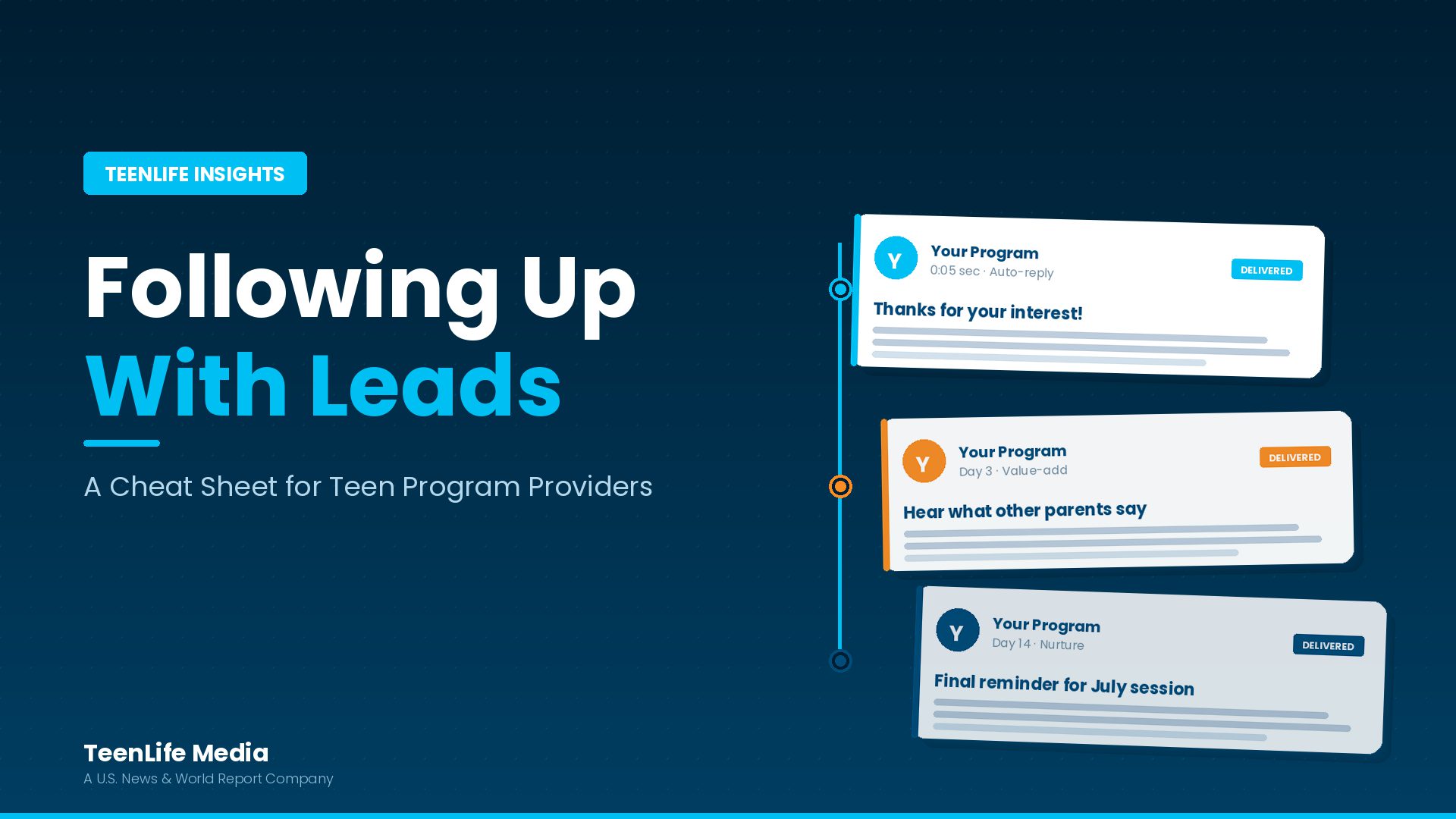
- Nurture with value. Send 3-5 emails over 2-3 weeks. Each one answers a different concern: program overview, parent testimonial, logistics and safety, pricing and financial aid, deadline reminder. Don't just email when you want something.
- Convert with urgency and proof. Combine scarcity ("12 spots remaining in Session 2") with social proof ("here's what last year's parents said") in your closing push. Scarcity alone feels like a sales tactic. Scarcity plus proof feels like a real opportunity they might miss.
- Re-engage for next year. After the season, send a recap. Collect testimonials immediately. Open an early-bird list for the following year. The easiest enrollment to close is a returning family.
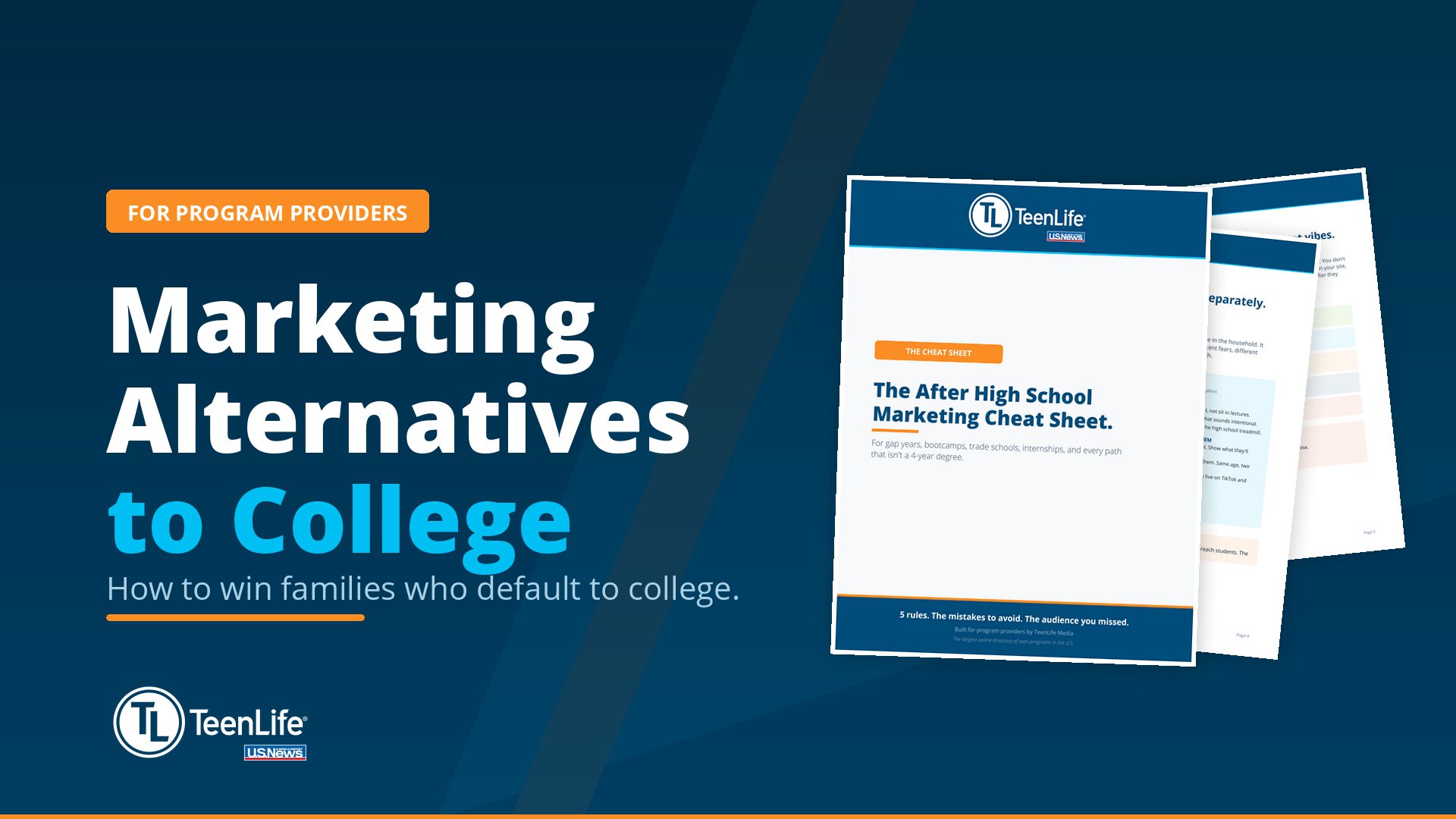
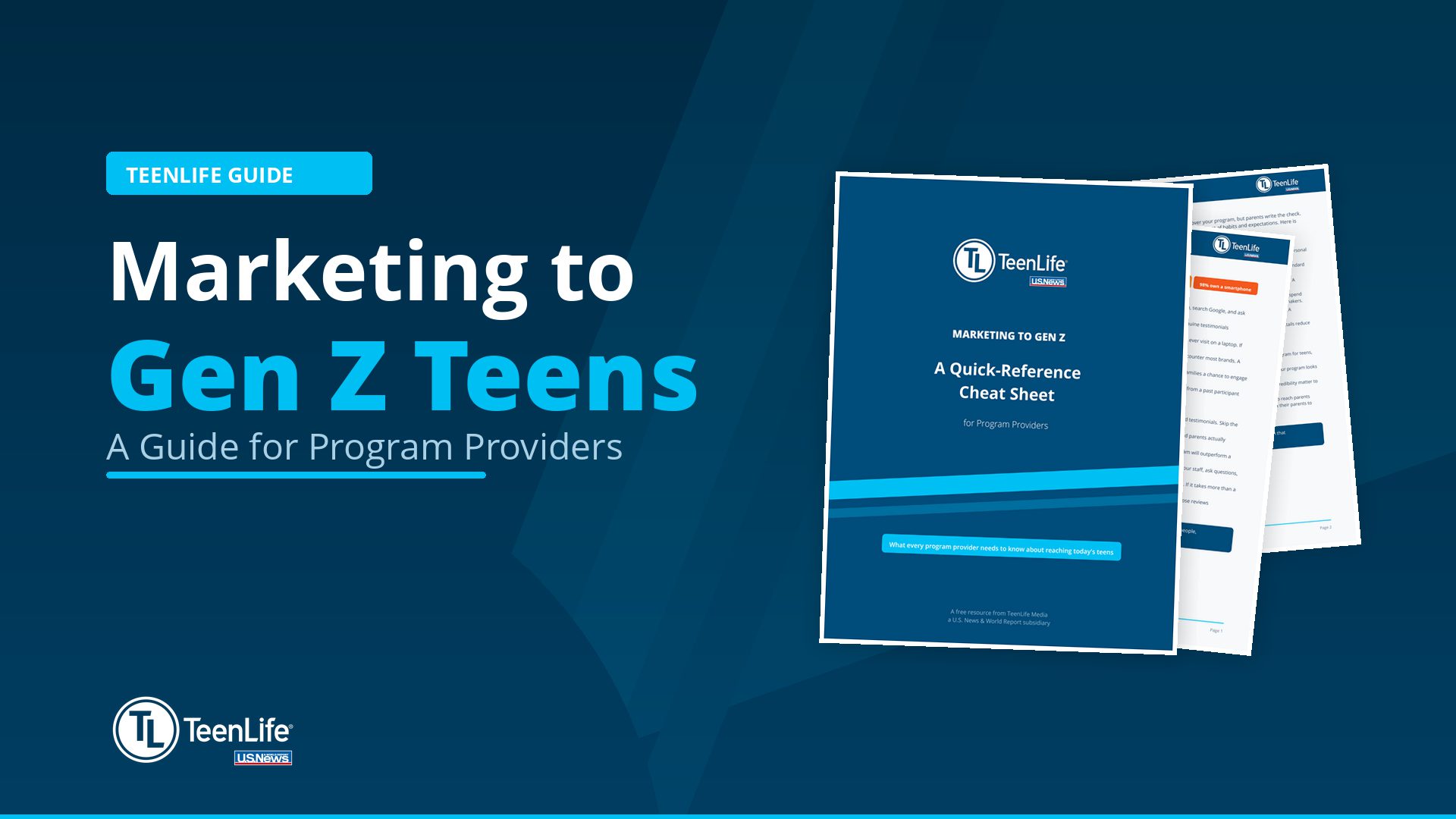
If you want the specific tactics, channel breakdowns, and messaging examples in a format you can reference while planning, we put together a free cheat sheet that covers all of this.
How TeenLife helps you reach parents
TeenLife connects teen program providers with the families who are actively searching for experiences like theirs. Through our directory listings, targeted advertising, email campaigns, annual print and digital guides, and webinars, we help you reach both teens and parents on the channels that actually work.
If you're already marketing to teens but struggling to reach their parents, our advertising options are built to close that gap. Learn more about working with TeenLife.
FAQ
How do I reach parents of teens on social media?
Facebook is the strongest platform for reaching Millennial parents directly. Run targeted ads aimed at parents (ages 35-55, interests in education and parenting) with separate creative from your teen-facing campaigns. Instagram reaches both audiences. Use it to validate your program with polished content that parents can browse when their teen mentions you.
What messaging works best with parents of high school students?
Lead with outcomes, not activities. Parents want to know what their teen will gain: skills, confidence, connections, and college readiness. Pair that with trust signals (reviews from other parents, safety information, staff credentials) and clear logistics (pricing, dates, registration process).
When should I start marketing to parents for summer programs?
Begin re-engaging your existing parent list in October. Launch paid campaigns and email outreach in January. Peak research happens January through March, with a secondary window in April through May for late registrants.
How many touchpoints does it take to convert a parent?
Most parents need 4-7 touchpoints before they enroll. This typically includes some combination of discovery (directory, search, social), research (website visit, review reading), engagement (email, webinar), and conversion (deadline-driven outreach).

Dustin Silvaer
Dustin Silvaer is a Digital Marketing Manager at TeenLife.com, where he leads paid advertising, marketing automation, and partnership development for one of the largest teen program directories in the country.


Organization with listings on TeenLife? Login here
Register for Free
We’re here to help you find your best-fit teen-centered academic and enrichment opportunities.
Forgot Password
"*" indicates required fields